Lower back pain is no longer just a problem for older adults—it has become one of the most common health issues across all age groups.
Whether you spend long hours at a desk, train regularly at the gym, or simply go about your daily activities, you may one day experience sudden pain in your lower back. This discomfort can limit your movement and impact your quality of life.
But what actually causes lower back pain?
And how can you tell the difference between a temporary strain and a warning sign that requires medical attention?
In this article, we’ll explore the main causes of lower back pain, when it becomes serious, and the best ways to manage and prevent it.
Common Causes of Lower Back Pain
Lower back pain can arise from many different factors—some related to lifestyle, others linked to underlying medical conditions. The most common include:
- Poor posture: Sitting or standing for long periods in an unhealthy position puts continuous stress on the lumbar spine.
- Improper lifting: Carrying heavy weights with bad form—whether during workouts or daily tasks—can strain muscles or cause a slipped disc.
- Weak core muscles: The back doesn’t work alone. From my experience, weak glutes and hamstrings are often the ‘silent culprits.’ When these muscles are weak, your lower back takes on the entire load, leading to chronic strain and pain.
- Sudden muscle strain: Quick movements or intense exercise without proper warm-up can trigger pain.
- Herniated disc (slipped disc): A frequent cause of chronic pain, which may also radiate down to the legs if nerves are compressed.
Understanding the root cause of your pain is the first step toward proper treatment and long-term relief.
When Is Lower Back Pain Serious?
In many cases, lower back pain is caused by mild muscle tension and improves with rest, stretching, or light activity.
However, certain symptoms may signal a more serious condition that requires urgent medical evaluation:



- Pain lasting longer than two weeks without improvement
- Pain radiating into the legs, or accompanied by numbness and tingling
- Difficulty standing or walking normally
- Loss of bladder or bowel control (medical emergency)
- Severe pain after a fall or accident
If any of these occur, seek medical help immediately to prevent complications.
Muscle Strain vs. Herniated Disc: How to Tell the Difference
| Feature | Muscle Strain | Herniated Disc |
|---|---|---|
| Nature of pain | Localized, in one spot | Deep pain, may radiate to leg or buttocks |
| Cause | Overstretching or tearing from sudden movement | Disc pressing on a nerve due to slippage |
| Pain location | Lower back only | Lower back plus leg pain (sciatica) |
| Additional symptoms | Stiffness, pain with movement, usually no numbness | Tingling, numbness, weakness, difficulty walking |
| Relief with rest | Often improves within days | May persist for weeks and often needs medical care |
If pain continues or you suspect nerve compression, consult a doctor instead of self-diagnosing.
How to Prevent Lower Back Pain
The best cure is prevention. Protecting your spine comes down to daily habits:
- Maintain good posture: Keep your back straight, feet flat, and use a chair with lumbar support.
- Avoid prolonged sitting: Stand up and move every 30–45 minutes, especially if you work at a desk.
- Strengthen core muscles: Don’t just focus on your back. To truly stabilize the spine, you must strengthen the muscles that support it from below. In my recovery, focusing on the posterior chain (glutes and hamstrings) was the missing piece of the puzzle. Strong legs and a solid core act as a natural shield for your lower back..
- Lift properly: Bend at the knees, not the waist, and keep your back straight when lifting.
- Choose the right mattress: A supportive mattress makes a big difference in spinal health.
- Manage weight: Excess body weight increases stress on the lower back.
- Listen to your body: Don’t ignore persistent pain—early action prevents serious issues.
My Personal Journey with Back Pain
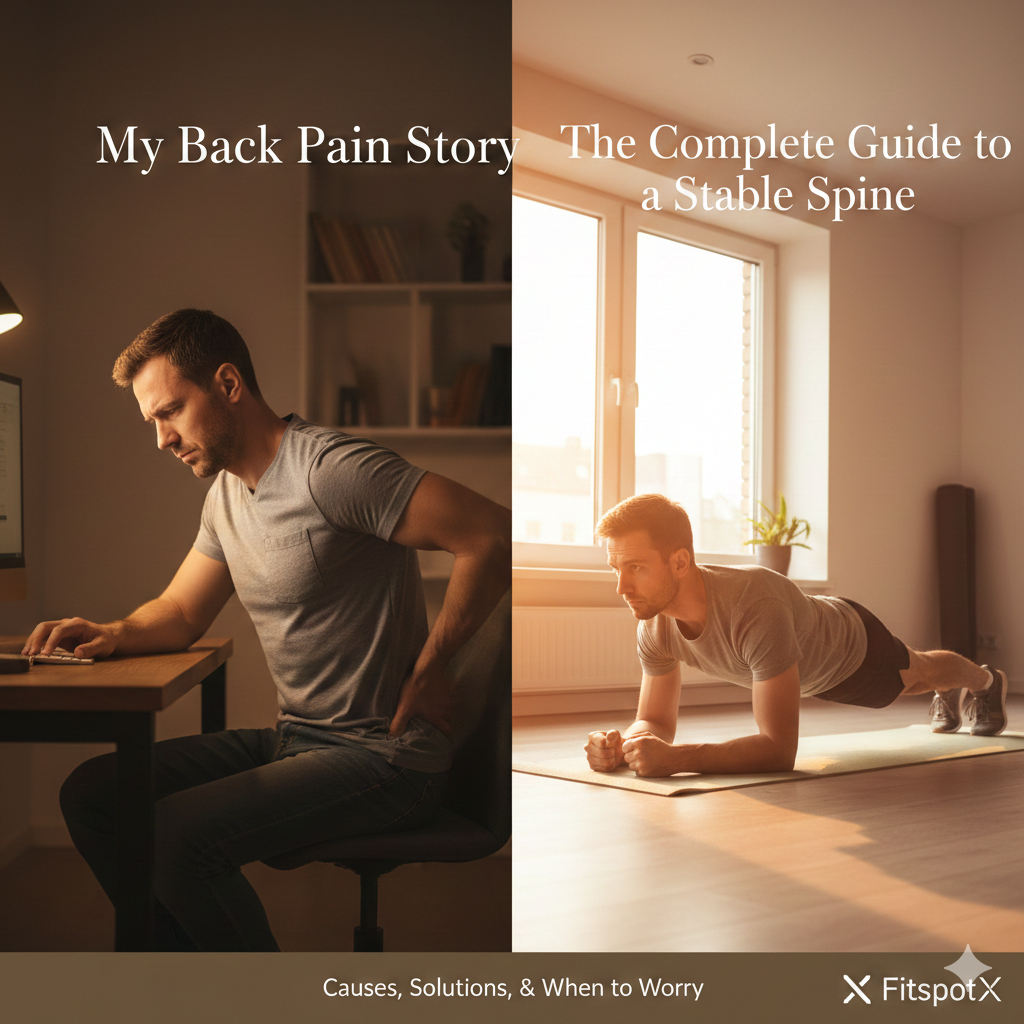
I’m not just sharing medical facts; I’ve been where you are. For a long time, I struggled with persistent lower back pain that made daily life a challenge. Like many, I thought the problem was just my back. However, I discovered that my back was overcompensating for weaknesses elsewhere. It wasn’t until I focused on strengthening my glutes, hamstrings, and core that my pain significantly vanished. This shift in focus changed everything for me, and it might do the same for you.
Conclusion
Lower back pain is more than just discomfort—it can disrupt your day, drain your energy, and limit your mobility.
The good news? Most cases improve with small lifestyle changes, awareness, and proactive care.
Stay active. Strengthen your body. Train smart. And most importantly, treat your back as a long-term investment in your health and quality of life.
When you take care of your body today, it will take care of you tomorrow.
FAQs
1. Does all lower back pain mean a herniated disc?
No. Most cases are muscle-related and temporary. Herniated discs require medical diagnosis.
2. Can I exercise with lower back pain?
Mild muscular pain may improve with light stretching. Severe pain or neurological symptoms require rest and medical advice.
3. What’s the best sleeping position for back pain?
Sleeping on your side with knees slightly bent, or on your back with a pillow under your knees, helps reduce pressure.
4. Can stress cause back pain?
Yes. Emotional stress often leads to muscle tension, which can trigger or worsen lower back pain.
5. When should I see a doctor?
If pain lasts more than two weeks, radiates to the legs, or causes numbness, weakness, or bladder/bowel issues—seek medical care immediately.